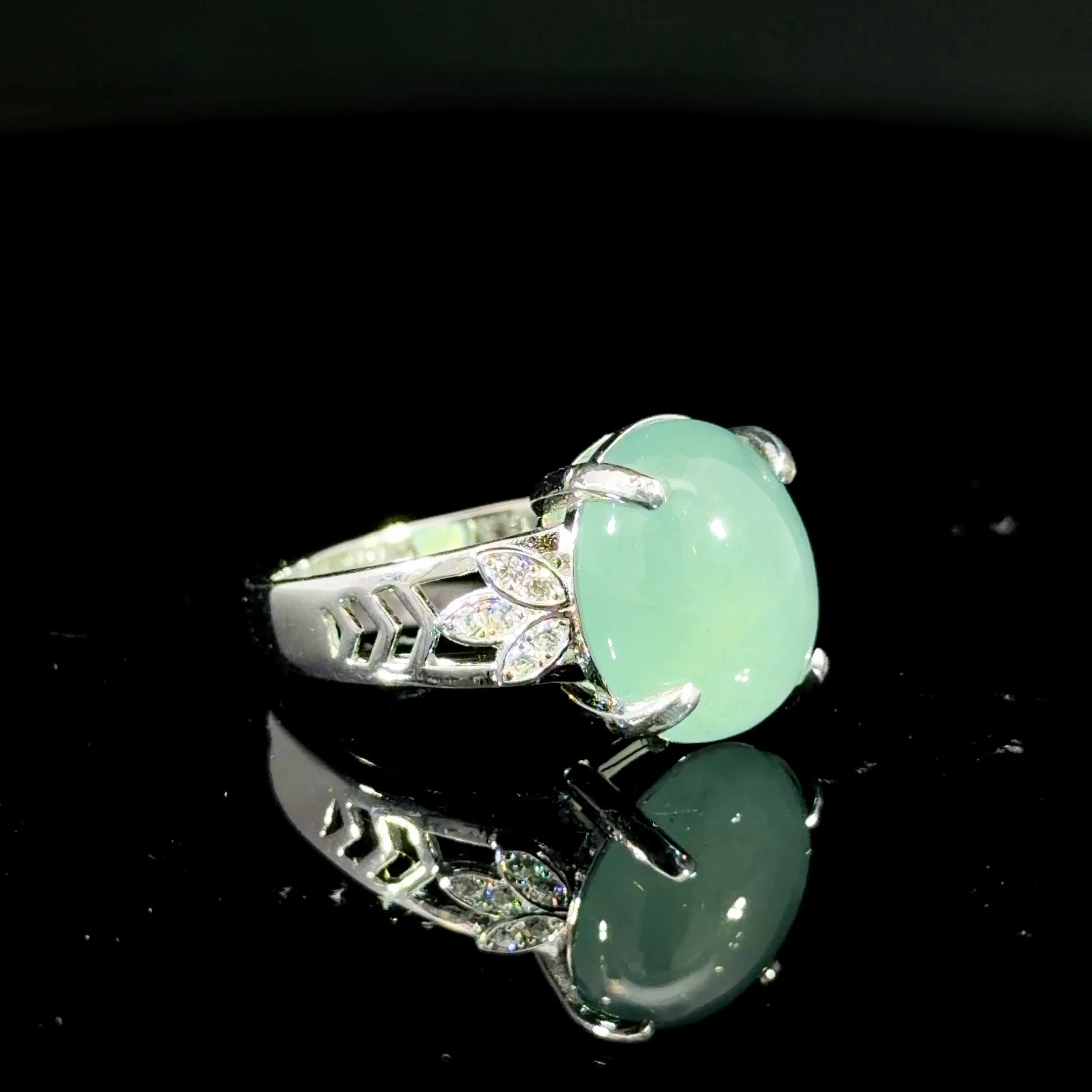
As you shop for fine Jadeite, you’ve likely seen the terms Type A, Type B, and Type C (or even B+C). Many shoppers assume "A" is just a quality grade, like an "A" on a report card.
The truth? It’s about authenticity, not just surface beauty.
In the world of Jadeite, these types tell you if the stone is natural or a "science project."
Type A (Natural): 100% natural Jadeite, mined from the earth, cut, and polished. A light surface coating of natural beeswax to smooth microscopic surface pits is the only traditional finishing method recognized by major gemological laboratories (including the GIA) for Type A classification.
Type B (Bleached & Filled): This jade is soaked in strong acids to "bleach" out brown or black inclusions. This process leaves the stone porous, like a sponge, so it is then vacuum-injected with polymer resin. It looks pretty today, but the chemicals weaken the stone, making it prone to cracking or yellowing over time.
Type C (Dyed): This is Jadeite that has been artificially colored. The color is "painted" inside the cracks and will eventually fade or change. There is also B+C, which is basically the works.
Why We Exclusively Offer Type A at ClingGem
Beyond long-term value, authenticity is a matter of durability and safety. Treated Type B and C stones have compromised crystalline stability and are loaded with industrial chemicals.
By sourcing our genuine Guatemalan Jadeite exclusively within the Americas through trusted trade channels, ClingGem bypasses mass-market overseas processing facilities where acid bleaching and synthetic resin injections are widespread.
When you purchase Guatemalan Jadeite from ClingGem, you receive a gemstone forged under the ancient fault lines of the Motagua Valley—as pure, resilient, and authentic as the day it was unearthed.